How Jowls Form and What to Do About Them

As we age, one of the most noticeable changes in our facial appearance often happens around the jawline. The smooth, firm skin that once defined your lower face begins to loosen and sag, creating what’s commonly referred to as jowls.
For many people, jowls can be one of the first visible signs of aging, contributing to a tired or heavy look even when you feel youthful inside. While they’re a natural part of aging, the good news is that modern aesthetic treatments make it possible to lift and tighten sagging skin without surgery.
One of the most effective options available today is the PDO Thread Lift — a minimally invasive treatment that restores youthful contours, improves skin texture, and redefines the jawline naturally.
Here’s a closer look at how jowls form, why they appear over time, and what you can do to correct them safely and effectively.
What Are Jowls?
Jowls refer to the loose, sagging skin that develops along the jawline and lower cheeks as a result of aging and structural changes beneath the skin. They often make the face appear droopy or less defined, softening the crisp angles that once outlined the lower face.
Jowls vary in severity — from mild sagging that blurs the jawline to more noticeable folds of skin that create an uneven, aged appearance. They typically begin to appear in your 30s or 40s, although genetics, lifestyle, and environmental factors can influence when and how quickly they develop.
How Jowls Form
To understand how to treat jowls effectively, it helps to know what causes them in the first place. Several biological and lifestyle factors contribute to their formation.
1. Collagen and Elastin Loss
Collagen and elastin are the proteins responsible for keeping your skin firm, elastic, and supported. As you age, your body naturally produces less of these proteins, leading to thinner, looser skin that’s more prone to sagging.
2. Gravity and Skin Laxity
Over time, gravity continuously pulls the skin downward. Combined with reduced elasticity, this gradual shift leads to drooping around the cheeks and jawline — the hallmark sign of jowls.
3. Volume Loss in the Mid-Face
Fat pads in the cheeks naturally shrink and shift downward with age. This loss of volume leaves the lower face looking heavier while deepening folds around the mouth and jawline.
4. Muscle Weakness and Structural Changes
The supportive muscles and connective tissues beneath the skin weaken over time. Without strong structural support, the skin around the jawline begins to sag.
5. Lifestyle Factors
Certain habits can accelerate jowl formation, including:
- Sun exposure: UV radiation breaks down collagen faster.
- Smoking: Reduces circulation and speeds up skin aging.
- Poor hydration or diet: Deprives the skin of essential nutrients.
- Weight fluctuations: Repeated stretching and contracting of the skin affect elasticity.
Can You Prevent Jowls?
While it’s impossible to completely stop aging, you can slow the process and keep your skin firmer for longer. Here are a few preventative measures that make a big difference:
- Maintain a skincare routine: Use products containing retinol, peptides, and antioxidants to support collagen.
- Wear sunscreen daily: Protects against UV damage that accelerates sagging.
- Stay hydrated: Keeps the skin supple and resilient.
- Avoid smoking and limit alcohol: Both dehydrate and weaken the skin’s structure.
- Keep a stable weight: Fluctuations can stretch and damage collagen fibers.
- Facial exercises: Gentle toning movements can strengthen muscles and improve circulation.
Even with consistent care, aging still takes its toll. Fortunately, aesthetic treatments like PDO Thread Lifts can reverse visible sagging and restore a naturally lifted look — without the need for surgery.
What Is a PDO Thread Lift?
A PDO Thread Lift is a non-surgical cosmetic procedure designed to lift and firm sagging skin using dissolvable threads made from polydioxanone (PDO).
These fine threads are carefully inserted just beneath the skin using a thin needle or cannula. They provide an immediate lifting effect and continue working over time by stimulating collagen production.
As the threads dissolve naturally over several months, they leave behind a network of new collagen fibers that keep your skin firmer, tighter, and more youthful-looking.
How a PDO Thread Lift Treats Jowls
PDO threads are particularly effective for correcting jowls because they target the underlying causes of sagging — skin laxity and collagen depletion.
1. Immediate Lift
When the threads are placed strategically along the jawline and lower face, they gently pull the skin upward, restoring the appearance of a firm, sculpted contour.
2. Long-Term Collagen Boost
Over the next several months, the body naturally produces collagen around the threads, which helps tighten and strengthen the skin from within. Even after the threads dissolve, this newly formed collagen continues to support the structure of your jawline.
3. Natural-Looking Results
Unlike surgery, PDO threads create a subtle, natural-looking improvement. The results enhance your features without making you look “overdone.”
Benefits of a PDO Thread Lift
Patients choose PDO thread lifts as an alternative to surgical facelifts for several key reasons:
- Instant results: You’ll notice visible lifting immediately after the treatment.
- Minimal downtime: Return to most daily activities within a day or two.
- No incisions or scars: The procedure uses fine needles, not scalpels.
- Collagen stimulation: Encourages natural skin rejuvenation over time.
- Customizable: Threads can be placed to target specific areas like the jawline, cheeks, or neck.
- Natural results: Enhances your appearance without drastic changes.
This treatment offers the perfect balance between subtle rejuvenation and noticeable tightening — ideal for those who want to look refreshed without surgery.
What to Expect During a PDO Thread Lift
Consultation and Planning
Your treatment begins with a detailed consultation to discuss your concerns and desired outcome. The practitioner will examine your facial structure and create a personalized plan tailored to your needs.
Preparation
A local anesthetic is applied to ensure comfort. Once the area is numb, the practitioner inserts the PDO threads into the targeted areas using fine, flexible needles.
Placement and Lifting
The threads are carefully positioned beneath the skin to create a lifting effect. Once in place, they act as an internal support structure, tightening the skin and improving definition along the jawline.
Duration
The entire procedure typically takes 30–60 minutes, depending on the number of threads used and the treatment area.
After the Procedure
You may notice mild swelling or tightness immediately after treatment, but these effects usually subside within a few days. You’ll also see an instant lift, with continued improvement over the following weeks as collagen production increases.
Aftercare and Recovery
Recovering from a PDO Thread Lift is straightforward and involves minimal downtime.
Aftercare tips include:
- Avoid rubbing or massaging the treated area for one week.
- Sleep on your back with your head elevated to minimize pressure.
- Avoid strenuous exercise, saunas, or facial treatments for 7–10 days.
- Use gentle skincare products and avoid harsh exfoliants during recovery.
Following these instructions helps the threads settle properly and ensures optimal, long-lasting results.
How Long Do PDO Thread Lift Results Last?
You’ll see immediate improvement after your treatment, but the most dramatic results appear within two to three months as collagen continues to develop.
Results typically last 12–18 months, depending on your age, lifestyle, and skin condition. Some patients schedule maintenance treatments annually to preserve their youthful contour.
PDO Thread Lift vs. Surgical Facelift
While a traditional facelift can deliver more dramatic changes, it also involves surgery, anesthesia, and weeks of recovery.
A PDO Thread Lift, on the other hand, offers a more subtle yet natural rejuvenation without the risks and downtime of surgery. It’s ideal for those with mild to moderate sagging who want visible lift and firmness without incisions.
Comparison Summary:
| PDO Thread Lift | Surgical Facelift | |
| Invasiveness | Non-surgical | Surgical procedure |
| Recovery Time | 1–3 days | Several weeks |
| Scarring | None | Possible |
| Results Duration | 12–18 months | 5–10 years |
| Collagen Stimulation | Yes | Minimal |
| Anesthesia | Local | General |
For many, the PDO Thread Lift provides the perfect middle ground — natural-looking lift and rejuvenation without the commitment of surgery.
Final Thoughts
Jowls may be a natural part of aging, but that doesn’t mean you have to live with them. With a PDO Thread Lift, you can reclaim a youthful, defined jawline and tighter, smoother skin — all without surgery or lengthy recovery.
By combining instant lifting with long-term collagen production, this innovative treatment delivers lasting improvements that enhance your natural beauty and restore facial balance.
If you’re ready to reduce sagging and bring back a firm, youthful contour to your lower face, a PDO Thread Lift could be the perfect solution.
Frequently Asked Questions
What causes jowls to form?
Jowls develop due to collagen loss, gravity, muscle weakening, and lifestyle factors such as sun exposure or smoking. These factors lead to sagging skin around the jawline and cheeks.
Can a PDO Thread Lift remove jowls completely?
While it doesn’t remove excess skin, a PDO Thread Lift significantly lifts and tightens sagging tissue, reducing the appearance of jowls and restoring a defined jawline.
Who is a good candidate for a PDO Thread Lift?
Ideal candidates are individuals with mild to moderate skin laxity who want to lift and tighten their skin without surgery.
Are PDO threads safe?
Yes. PDO threads are made from a biodegradable material that is safely absorbed by the body over time.
How often should I get a PDO Thread Lift?
Most patients benefit from repeating the treatment every 12–18 months to maintain optimal results.
Current Promotions
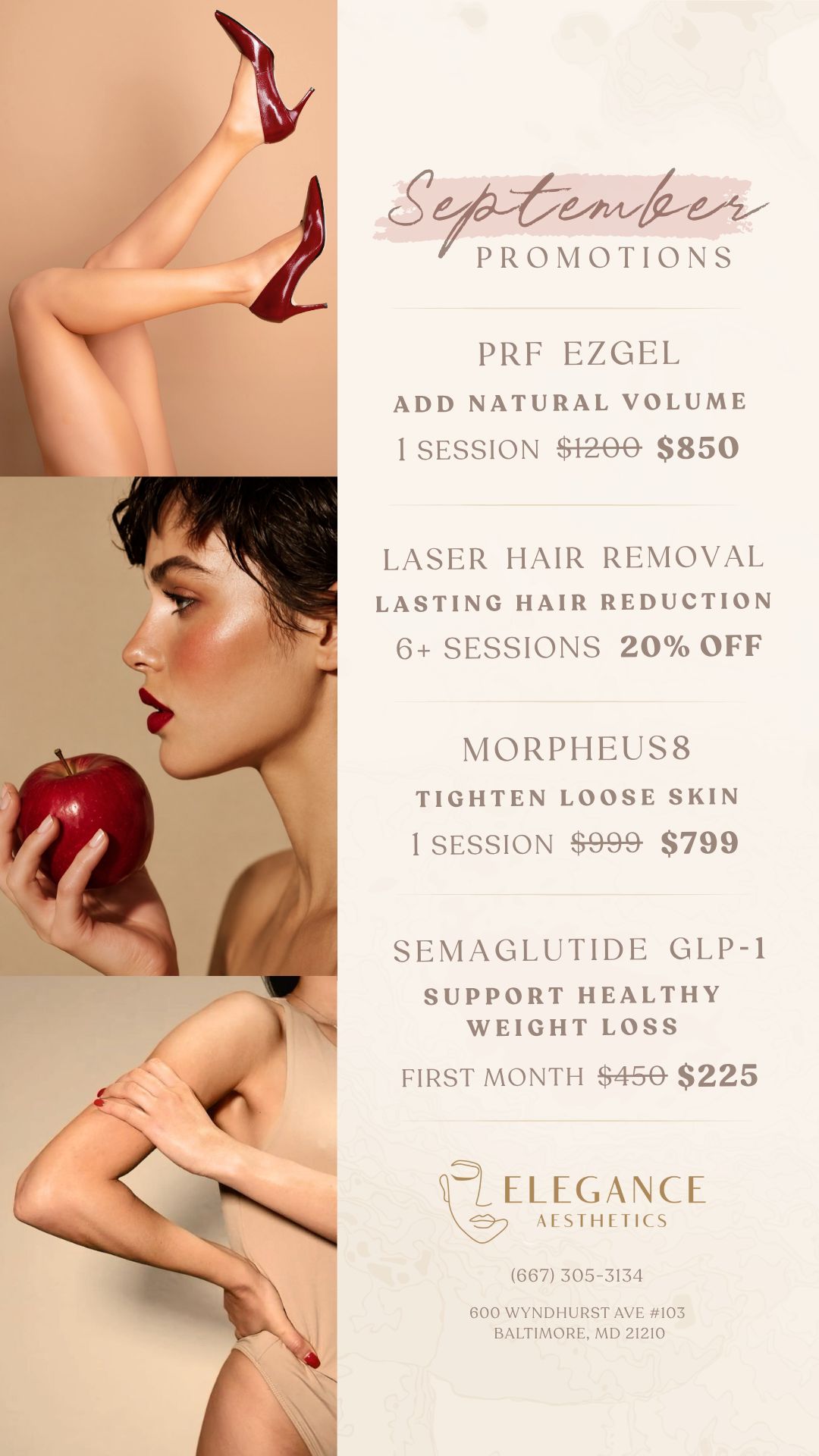
This September at Elegance Aesthetics, we’re excited to offer PRF EZGel for $850 (originally $1200) to add natural volume, plus 20% off laser hair removal when you purchase 6 or more sessions. We’re also featuring Morpheus8 skin tightening for just $799 per session and our Semaglutide GLP-1 program at half off—only $225 for your first month to support your healthy weight loss journey.- Book Now