What Does Botox Under Eyes Do?
The under-eye area can change the way the whole face looks. Fine creases, crow’s feet, puffiness, hollowing, and shadows can make the eyes look tired even when you feel rested. Since Botox is widely used for expression lines around the upper face, many patients ask if it can also be used closer to the lower eyelid.
Botox under eyes may help soften select movement-related lines beneath or near the eyes, especially when the concern is linked to muscle movement during smiling or squinting. It is not the right answer for every under-eye concern. True under-eye bags, deep hollows, loose skin, fluid retention, and pigmentation usually need a different type of assessment.
Elegance Aesthetics Spa offers Botox treatment for several expression-related areas, including crow’s feet around the eyes. A consultation can help determine whether the concern is a muscle-related crease, a volume issue, skin laxity, puffiness, or a combination of factors.
About Botox Under Eyes
Botox under eyes is usually a subtle treatment, not a full lower-eyelid transformation. It may be discussed for fine lines that appear with facial movement, but it cannot remove every under-eye concern.
Key points to know before treatment include:
- Botox can soften movement-related creases near the lower eyelid for selected patients.
- Botox for crow’s feet is more common than direct lower-eyelid injection.
- Under-eye bags caused by fat pads, fluid, or loose skin will not disappear with Botox.
- Careful dosing matters because the eye area is delicate.
- Poor candidacy or over-treatment can make the area look heavier, weaker, or more creased.
- A consultation should review smiling, squinting, eyelid support, skin quality, and under-eye volume.
The best plan is based on what is causing the concern, not the area name alone.
How Botox Works Around the Eyes
Botox is a neuromodulator that temporarily relaxes targeted muscles. Around the eyes, it is most commonly used to soften lines that appear when the orbicularis oculi muscle contracts during smiling or squinting.
Crow’s feet sit at the outer corners of the eyes. These lines are often a good Botox treatment area because they are closely tied to repeated muscle movement. Under-eye creases can also involve muscle movement, but the lower eyelid is more delicate and less forgiving.
A small dose in the wrong place can affect support, smile shape, or eyelid function. That is why treatment near the lower eyelid should be conservative and carefully planned.
Botox Under Eyes for Bags
Botox under eyes for bags is often misunderstood. Botox does not remove fat pads, drain fluid, tighten major loose skin, or fill hollow tear troughs. If the “bag” is caused by protruding fat, skin laxity, swelling, or anatomy, Botox will usually not solve it.
Botox may help the appearance of the surrounding area if muscle movement is making fine lines more visible near the eyes. It can sometimes soften the tension around crow’s feet, which may make the outer eye area look smoother.
The difference matters. If your concern is puffiness under the lower lid, filler, skin treatments, energy-based treatments, surgery, or lifestyle and medical review may be more relevant than Botox.
Does Botox Help With Bags Under Eyes?
Does Botox help with bags under eyes? It may improve nearby wrinkles for selected patients, but it does not remove true under-eye bags. The American Society of Plastic Surgeons gives similar guidance, noting that Botox in the crows feet area may improve the surrounding skin but will not remove the bag itself.
Under-eye bags can come from fat pad prominence, genetics, aging, fluid retention, allergies, sleep, salt intake, or skin laxity. Botox works on muscle movement, so it cannot correct every one of those causes.
If the concern is both wrinkles and puffiness, a provider may discuss Botox for the movement lines and another option for the bag itself.
Can You Get Botox Under Your Eyes?
Can you get Botox under your eyes? Some patients can, but it is not suitable for everyone. The lower eyelid area needs careful assessment because the skin is thin, the muscles are small, and eyelid support varies from person to person.
A candidate may have fine lines that appear during smiling, good lower-lid tone, realistic expectations, and no major puffiness or loose skin that would be worsened by muscle relaxation.
Someone with prominent bags, under-eye hollowing, weak lower-lid support, severe dry eye, major skin laxity, or a history of eye-area complications may need a different plan.
Botox for Crows Feet
Botox for crows feet is one of the most common ways to treat lines around the eyes. These lines form at the outer corners and often become more visible when smiling, laughing, or squinting.
Treating crow’s feet can soften the outer-eye area while avoiding the lower eyelid itself. For many patients, this is safer and more predictable than placing Botox directly under the eyes.
The treatment should still preserve a natural smile. Too much relaxation can make the eye area look flat or change expression. A balanced dose can soften lines while keeping warmth in the face.
Under-Eye Lines vs Under-Eye Bags
Under-eye lines and under-eye bags are different concerns. Lines are creases in the skin. Bags are fullness or puffiness under the lower eyelid. Shadows and hollows are another category again.
Botox is usually best suited to movement-related lines. Dermal filler may be discussed for hollowing in selected patients. Skin treatments may be discussed for texture, pigmentation, or crepey skin. Surgery may be more appropriate for significant fat pads or excess skin.
A consultation should separate the concern before any treatment is planned. Treating the wrong cause can lead to disappointment, even if the procedure itself is performed well.
What Treatment Feels Like
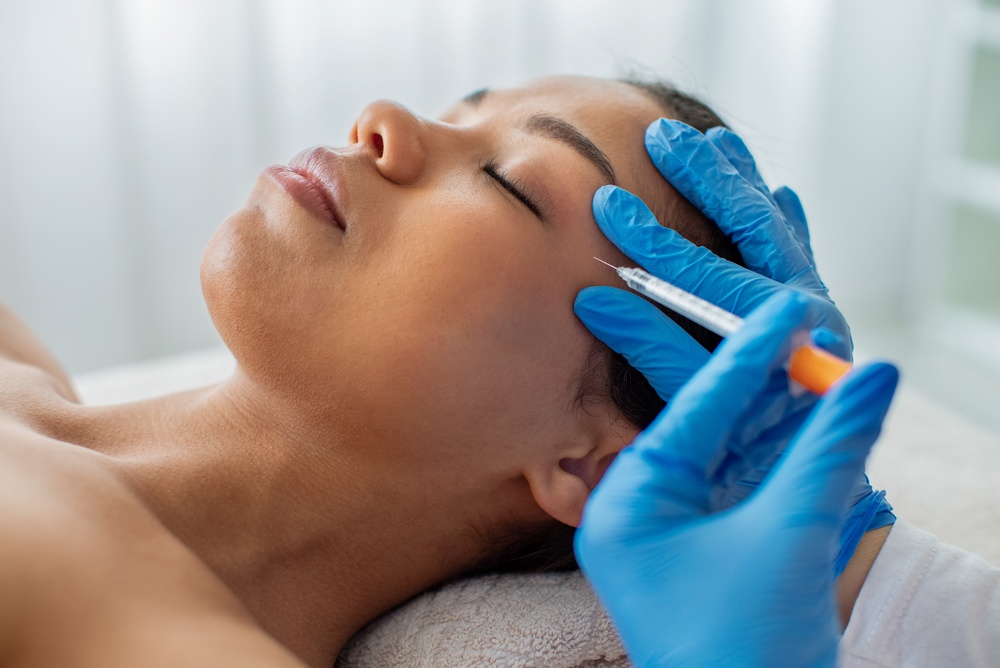
Botox treatment is usually quick. The area is assessed, the skin is cleaned, and small injections are placed in targeted points. Most people feel a brief pinch or pressure.
The eye area can feel more sensitive than other parts of the face. Tiny bumps, redness, tenderness, or a small bruise can happen at the injection points. These effects often improve within a short time.
Results do not appear right away. Botox usually takes several days to begin working, with fuller effects developing later. Your provider will explain what timing to expect based on the area treated.
What Results Can Look Like
Good Botox results around the eyes should look subtle. The goal is smoother movement lines, not a stiff or blank expression. With careful treatment, the outer-eye area may look softer when you smile or squint.
Direct under-eye treatment, if appropriate, should usually be conservative. A small change may be more flattering than trying to erase every crease. Some fine lines are part of natural movement, and removing too much movement can make the face look strained.
If bags, hollows, or loose skin are the main concern, Botox results may be limited. The treatment can only work on the muscle-related part of the issue.
Safety and Side Effects
Botox is a prescription injectable, so safety screening matters. Possible side effects include redness, swelling, bruising, tenderness, headache, dry eye, watery eye, asymmetry, eyelid heaviness, brow heaviness, or unwanted muscle weakness.
The Botox Cosmetic label includes warnings about distant spread of toxin effect. Symptoms such as trouble swallowing, breathing problems, speaking changes, or widespread weakness need urgent medical attention.
Treatment around the eyes should be handled carefully because eyelid position, eye comfort, and facial expression can be affected. Tell your provider about dry eye, eyelid surgery, neuromuscular conditions, pregnancy, nursing, allergies, and prior Botox reactions.
When Botox May Not Be the Right Fit
Botox may not be the best choice if the main issue is under-eye swelling, a deep tear trough, prominent fat pads, pigmentation, or significant loose skin. It may also be a poor fit if relaxing the lower-eye muscle would reduce support and make the area look worse.
Some patients need skincare, resurfacing, filler, PRP, or surgical evaluation instead. Others may benefit from Botox for crow’s feet while leaving the lower eyelid untreated.
A careful treatment plan should protect the natural shape of the eye. The under-eye area should look refreshed, not weakened.
Book a Botox Consultation for the Eye Area
Botox under eyes can soften select fine lines for the right candidate, but it is not a cure for true under-eye bags. The eye area needs careful assessment because lines, puffiness, hollows, skin laxity, and crow’s feet can all create different concerns.
Elegance Aesthetics Spa offers Botox treatment for expression-related wrinkles, including crow’s feet around the eyes. Your provider can review your under-eye concern, explain whether Botox is suitable, and discuss other options if the issue is not muscle-related.
Book a Botox consultation at Elegance Aesthetics Spa today to discuss under-eye lines, crow’s feet, bags, safety, and the right treatment plan for your face.
Frequently Asked Questions
Can Botox under eyes help fine lines?
Botox under eyes may help selected movement-related fine lines, but it should be conservative because the lower eyelid area is delicate.
Can you get Botox under your eyes?
Some patients can, but the area needs careful assessment. Lower-lid support, dryness, puffiness, and skin laxity can affect candidacy.
Does Botox help with bags under eyes?
Botox may soften nearby wrinkles, but it does not remove true bags caused by fat pads, swelling, loose skin, or anatomy.
Is Botox for crows feet different from under-eye Botox?
Yes. Crow’s feet treatment targets the outer corners of the eyes. Under-eye Botox involves a more delicate lower-eyelid area.
Can Botox make under-eye bags worse?
It can in some patients if muscle relaxation reduces support or changes how the lower eyelid area sits. Candidacy matters.
How long does Botox around the eyes last?
Results often last around three to four months, though timing can vary by dose, area, metabolism, and treatment history.
Does under-eye Botox hurt?
Most patients feel a quick pinch or pressure. The eye area can feel more sensitive, and small bruises or tenderness can happen.
What else can treat under-eye bags?
Options may include skincare, filler, resurfacing, PRP, energy-based treatment, or surgical evaluation, based on the cause.
Current Promotions
This October, we’re banishing ghost lines with Xeomin at $11/unit (Reg. $12.50) and offering a 3-session Vampire Facial (PRP microneedling) package for $1,500 (Reg. $1,875). You can also shed the dead skin with our VI Peel at $300 each (Reg. $350) or Cosmelan at $800 (Reg. $950), plus get 10% off per vial of spider vein removal. – Book Now